
Cash Needed to Buy a Home in Clark County WA
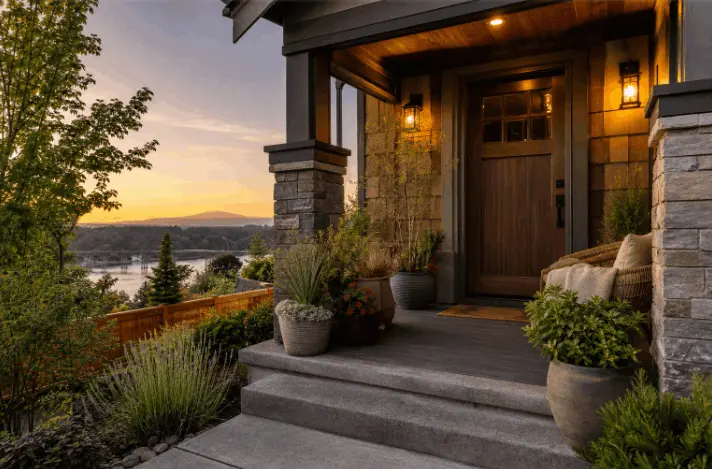
Most Clark County buyers need cash for four buckets: earnest money (typically 1–3% of the purchase price), closing costs, a down payment ranging from 3.5% to 20% or more depending on loan type, and sometimes reserves. The exact total depends on your loan program, price point, and negotiated terms.
How much cash do you really need to buy a home in Clark County, WA?
Most Clark County buyers need to plan for four separate cash buckets: a down payment (as low as 3.5% with an FHA loan, or 3% on some conventional programs), closing costs, earnest money deposited shortly after mutual acceptance, and in some cases mortgage reserves. Recent local market data puts the median sale price in Vancouver at $485,000, so even a 3.5% down payment means real money, and closing costs, earnest money, and any reserves come on top of that. The exact total depends on your loan type, the price of the home, and what you negotiate with the seller.
Key Takeaways
- The median sale price in Vancouver is $485,000, with homes selling in a median of 12 days, so buyers need to have their cash ready before they find the home they want.
- FHA loans allow a minimum 3.5% down payment for borrowers with a credit score of 580 or higher; borrowers between 500–579 typically need 10% down.
- Earnest money in Southwest Washington commonly runs 1–3% of the purchase price and is due within about two business days of mutual acceptance, before closing, not at it.
- Closing costs in Washington include several categories (lender fees, title, escrow, prepaids, and prorated taxes) that vary by loan type, price, and closing date, there is no single fixed total.
- Earnest money is credited toward your total cash to close, so it does not increase your overall outlay, but it does require you to have those funds liquid and accessible early in the transaction.
What are the four cash buckets every Clark County buyer needs to plan for?
Before you start touring homes, you need a clear picture of when cash leaves your account and why. There are four distinct buckets, and they don't all come due at the same time.
Bucket 1: Earnest money, due fast, before you're ready
Earnest money is the deposit you put down to show the seller you're serious. In Southwest Washington, 1–3% is the common range, with mid-1% to mid-2% being typical in Portland-adjacent Clark County markets. In more competitive micro-markets, think newer subdivisions in Camas, or listings drawing multiple offers, buyers sometimes choose to go higher to strengthen their position.
The timing is what catches buyers off guard. In Washington, earnest money is typically due within about two business days of mutual acceptance, that's when both parties have signed the purchase and sale agreement. It goes into escrow with a closing agent, not to the seller directly.
Here's the part that matters for your cash planning: earnest money is credited back to you at closing. It applies toward your down payment or closing costs. So it doesn't increase your total outlay, it just means you need those funds liquid and accessible early, before you're anywhere near the closing table.
Bucket 2: Down payment, your biggest variable
Your down payment is the largest single number in this equation, and it varies widely depending on your loan program.
According to Amerisave's 2026 FHA down payment guide, borrowers with a credit score of 580 or higher can qualify for an FHA-insured mortgage with a minimum 3.5% down payment. Borrowers with scores between 500 and 579 typically need 10%. The Home Buying Institute's FHA requirements overview confirms these minimums apply nationwide, including every city and ZIP code in Clark County.
Conventional loans can go as low as 3% down on some programs, though lender requirements vary. VA loans and USDA loans have their own structures entirely. No Washington state statute sets a required down payment percentage for conventional loans, that's purely a lender and program decision, which is why your specific lender's guidance matters more than any general rule you read online.
To put real numbers behind this: recent local market data shows the median sale price in Vancouver at $485,000. Prices vary significantly across Clark County, see the area breakdown below. Your down payment percentage applies to whatever price you're actually buying at, so knowing your target area helps you plan.
| Area | Median Sale Price | Median Days on Market |
|---|---|---|
| Vancouver | $485,000 | 12 |
| Washougal | $725,000 | 52 |
| Ridgefield | $662,500 | 67 |
| Battle Ground | $575,000 | 27 |
| La Center | $635,000 | 54 |
| Brush Prairie | $887,500 | 51 |
| Yacolt | $681,750 | 52 |
Area-level medians based on aggregated public listing data, trailing ~90 days, as of September 2026. Individual home values vary by condition, street, build year, and timing.
If you're relocating from Portland and comparing Clark County prices to what you've seen on the Oregon side, I'd also point you to my post on relocating to Vancouver, WA as an out-of-state buyer, it covers the full picture of what makes this market different from what you may be used to.
Bucket 3: Closing costs, categories, not a fixed number
Closing costs in Washington are real, and they're not small, but there's no single number that applies to every buyer. What you'll see on your loan estimate will depend on your lender, your loan type, the purchase price, and when you close.
The main categories include:
- Lender fees, origination charges, underwriting, and any discount points you choose to buy
- Title insurance, both a lender's policy (required) and an owner's policy (strongly recommended); which party pays which is commonly negotiated in the purchase and sale agreement
- Escrow and closing fees, paid to the closing agent who manages the transaction
- Prepaids, homeowners insurance premium, prepaid mortgage interest from your closing date to the end of the month, and the initial deposit into your escrow impound account for property taxes and insurance
- Prorated property taxes, Clark County property taxes are paid in arrears, so at closing you'll typically credit the seller for taxes already accrued but not yet due; the exact amount depends on your closing date and the county's billing cycle
- Recording fees, paid to Clark County to record the deed and deed of trust
- HOA transfer fees, if the property is in a homeowners association, expect a transfer fee and possibly a resale certificate fee
A Washington closing-cost calculator from StateCalc notes that closing costs in Washington commonly run around 2.5% of the purchase price on a prepaids-excluded basis. I'm not going to put a dollar figure on your closing costs here, because the real number depends on too many variables specific to your transaction. What I will tell you is that your lender is required to give you a Loan Estimate within three business days of your application, that document will show you the actual numbers for your situation. The CFPB's Loan Estimate explainer walks through exactly what to look for on that form.
One thing worth knowing for Clark County specifically: buyers relocating from Oregon sometimes expect Portland-area closing norms, but Washington's legal framework and common practices are different. The closing agent here is a licensed escrow officer, not an attorney, and who pays which cost is often negotiated in the purchase and sale agreement rather than set by statute. If a seller is motivated, closing-cost contributions are a legitimate part of the negotiation.
For a broader look at how the Clark County market is behaving right now, my Vancouver, WA housing market reality check gives useful context for what buyers are navigating this year.
Bucket 4: Reserves, sometimes required, always smart
Mortgage reserves are funds you keep in the bank after closing. They're measured in months of housing payment (principal, interest, taxes, and insurance), and some loan programs or lender guidelines require you to demonstrate them before approval.
Many Clark County buyers won't be required to show reserves at all, it depends on your loan type, down payment size, credit profile, and whether you're self-employed or purchasing a property with additional units. Borrowers who are self-employed, carrying other properties, or financing a small multifamily home in Vancouver or Camas are more likely to face a reserves requirement. Your lender will tell you exactly what applies to your file.
Even when reserves aren't required, having two to three months of housing costs set aside after closing is a reasonable cushion. Washington home inspections, moving costs, and any immediate repairs or updates add up fast, and you don't want to drain your account at the closing table and have nothing left.
When does each dollar actually leave your account?
Timing is the part of this conversation that most buyers don't think about until they're already in contract. Here's the actual sequence:
- Before you write an offer: You need your earnest money accessible and ready to wire or deliver as a cashier's check. It needs to be in an account you can move quickly, not tied up in a CD or a retirement account that takes days to liquidate.
- Within about two business days of mutual acceptance: Earnest money goes to the closing agent. This is the first cash out the door.
- Early in the inspection period: You'll pay your home inspector directly, typically at the time of inspection. If you request a re-inspection or a specialist (roof, sewer scope, chimney), those are additional out-of-pocket costs before closing.
- Before closing: If your lender requires seasoned funds, large deposits in your bank account may need to be documented or sourced. Don't move money around without asking your lender first, unexplained transfers can delay your closing.
- At closing: You bring the remaining cash to close, your down payment plus closing costs, minus the earnest money already credited. This typically comes as a wire transfer per your closing agent's instructions.
The full picture of how to prepare for this process before you start searching is something I cover in detail in my step-by-step checklist for buying a home in Vancouver from out of state.
Your specific number depends on your loan program, the home's price, your closing date, and what you negotiate. That's where a real conversation with a local lender and a market analysis from someone who knows Clark County actually matters. If you want to know what your realistic cash-to-close looks like for the price range you're targeting, I'm happy to walk through it with you.
If you'd like to know what homes are actually selling for in your target area, see the current market data for Vancouver and Clark County or get a free home valuation to ground your planning in real numbers.
If you want to see what buyers are finding at different price points across Clark County, the NAR's research and statistics offer national context, and the HUD local homebuying resources page can point you toward down payment assistance programs that may apply to your situation in Washington.
For Washington-specific homebuyer programs, the Washington State Housing Finance Commission administers down payment assistance and first-time buyer programs that Clark County buyers may qualify for, worth checking before you assume you need to come in with the full minimum out of pocket.
If you have questions about what loan programs are available in this market, the CFPB's Owning a Home toolkit is a solid starting point for understanding your options before you talk to a lender. And for FHA-specific guidance, HUD's Single Family Housing page has the authoritative program details.
If you've been reading reviews before reaching out to an agent, you can read what past clients have said about working with Bredlie Realty Group on Google.
Frequently Asked Questions
How much cash do I need right now vs. at closing to buy a house in Clark County, WA?
You need two separate pools of cash at two different times. First, earnest money, typically 1–3% of the purchase price, is due within about two business days of mutual acceptance, well before closing. At closing, you bring the remainder: your down payment plus closing costs, with the earnest money already credited back against that total. You'll also want funds available for the home inspection, which is paid directly to the inspector during the contingency period.
Is 3% down really enough to buy a home in Vancouver, WA, or do most people put more down?
Yes, some conventional loan programs allow as little as 3% down, and FHA loans require 3.5% for borrowers with a credit score of 580 or higher, those minimums apply in Clark County just as they do anywhere in the country. Whether that's the right choice for your situation depends on your financial picture, because a lower down payment typically means mortgage insurance costs and a higher monthly payment. Many buyers in this market choose to put down more when they can, but low-down-payment programs are a real and widely used option here.
What's a normal earnest money amount in Southwest Washington, will my offer look weak if I only put 1%?
In most parts of Clark County, 1% earnest money is within the accepted range and won't automatically read as weak. The typical range is 1–3%, with mid-1% to mid-2% common in this market. In more competitive situations, multiple offers, highly desirable areas, or listings with limited days on market, some buyers choose to go higher to signal commitment. Your agent can tell you what's appropriate for the specific home and market conditions you're facing.
Can I get my earnest money back if the deal falls through in Washington, or is it always non-refundable?
In Washington, earnest money is generally refundable if you cancel the transaction within a contingency that's still in effect, common examples include the inspection contingency, the financing contingency, and the appraisal contingency. If you remove contingencies and then back out without a contractual basis, you risk losing the deposit. The specific terms are spelled out in your purchase and sale agreement, so read those contingency deadlines carefully and don't waive protections without understanding what you're giving up.
Do I need extra savings or mortgage reserves on top of my down payment and closing costs to get approved?
Not always, many Clark County buyers won't face a formal reserves requirement, depending on their loan program and credit profile. Reserves are more commonly required for self-employed borrowers, buyers financing properties with multiple units, or those carrying other financed properties. Even when reserves aren't required by the lender, having two to three months of housing costs in savings after closing is a reasonable cushion for the unexpected costs that come with any home purchase.
What fees are fixed by Washington law and which closing costs can I negotiate or shop around?
Recording fees are set by the county and aren't negotiable. Most other closing costs, lender fees, title insurance, escrow fees, and even which party pays which cost, are either lender-specific or negotiable in the purchase and sale agreement. Washington law doesn't dictate that the seller must pay any particular closing cost; who pays what is commonly negotiated. Your Loan Estimate will show you which services you can shop for, and a competitive market analysis of the listing can tell you whether asking for seller concessions is realistic in the current conditions.
The bottom line: there's no single cash number that applies to every Clark County buyer, because too many variables are in play. What I can tell you is that knowing your four buckets, earnest money, down payment, closing costs, and reserves, and when each one comes due puts you in a much stronger position than buyers who only think about the down payment. If you want to run through what this looks like for your specific price range and loan type, reach out and let's build that picture together.
Equal Housing Opportunity. Shastine Bredlie, Realtor / Owner, Bredlie Realty Group, licensed in Washington State (Washington State Department of Licensing). This article is general information only and is not legal, tax, or financial advice, confirm your specific costs and loan terms with your closing agent, tax advisor, or lender. IDX information is provided exclusively for consumers' personal, non-commercial use and may not be used for any purpose other than to identify prospective properties consumers may be interested in purchasing. Information deemed reliable but not guaranteed to be accurate.
Categories
- All Blogs (25)
- Buyer Resources (1)
- Camas Real Estate, Luxury Homes, Southwest Washington (1)
- Clark County Real Estate (4)
- Battle Ground (1)
- Buyer Guides (1)
- Buying a Home, Clark County Market, First-Time Buyers, Relocation (1)
- Clark County Housing Market (1)
- Clark County Market (1)
- Home Buying in Southwest Washington (1)
- Lifestyle & Neighborhoods (1)
- Living in Battle Ground WA (1)
- Living in Brush Prairie WA (1)
- Living in Camas WA (1)
- Living in Kelso WA (1)
- Living in La Center WA (1)
- Living in Longview WA (1)
- Living in Ridgefield WA (1)
- Living in Southwest Washington (3)
- Living in Vancouver WA (1)
- Living in Washougal WA (1)
- Living in Woodland WA (1)
- Local Infrastructure (1)
- Market Insights (1)
- Market Insights, Buyer Resources, Seller Resources (1)
- Market Trends (1)
- Neighborhood Guides (1)
- New Construction (1)
- Relocation (1)
- Relocation, Vancouver WA, Buyer Resources (1)
- Relocation, Vancouver WA, Tax & Finance (1)
- Ridgefield Real Estate (1)
- Ridgefield WA Real Estate (1)
- Seller Resources (2)
- Seller Resources, Vancouver WA Real Estate (1)
- Selling a Home, Clark County Market, Closing Process (1)
- Selling a Home, Ridgefield WA (1)
- Southwest Washington Market (1)
- Vancouver Neighborhoods, Real Estate Investment, Buyer Resources (1)
- Vancouver WA Real Estate (5)
- Washougal Real Estate, Luxury Homes, Buyer Resources (1)
Recent Posts






GET MORE INFORMATION