
Real Estate Decisions and the Interstate Bridge Replacement
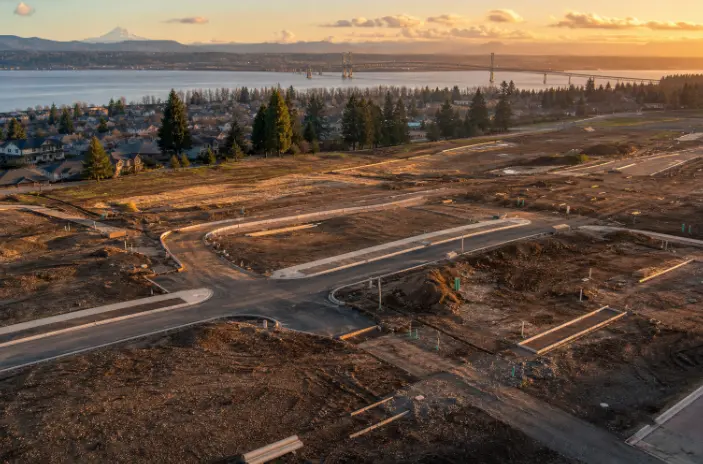
The Interstate Bridge Replacement Project received federal environmental approval in July 2026, with bridge construction expected to begin in 2028 and a new crossing projected to open around 2034–2035. Buyers and sellers in Southwest Washington should weigh near-term construction disruption against long-term transportation and transit benefits when making real estate decisions.
How will the Interstate Bridge Replacement affect commutes and real estate decisions in Southwest Washington?
The Interstate Bridge Replacement (IBR) Program cleared its final federal environmental hurdle in July 2026 and is now moving toward contractor selection and construction, with bridge work expected to begin in 2028 and a new crossing projected to open around 2034–2035. For buyers and sellers in Clark County, the key question isn't whether the project matters, it's how to separate near-term construction disruption from long-term transportation benefits when making real estate decisions today.
Key Takeaways
- The IBR Program received its Amended Record of Decision on July 1, 2026, completing federal environmental review and clearing the path to construction.
- Bridge construction is anticipated to begin in 2028, with the new crossing projected to open approximately six to seven years later, around 2034–2035.
- The program carries $5.5 billion in committed funding covering bridge replacement, I-5 connections, light-rail extension to Vancouver, and removal of the existing bridge.
- Recent local market data show the median sale price in Vancouver at $491,300 with a median of 12 days on market, a fast-moving market where real estate decisions still need to be grounded in today's numbers, not a projected 2034 commute.
- A property's proximity to the existing bridge is not, by itself, evidence it will be acquired, buyers and sellers near the corridor should verify against official IBR acquisition maps, not general distance estimates.
What has actually been decided about the Interstate Bridge Replacement?
A lot has moved forward since the project re-launched. On July 1, 2026, the IBR Program received its Amended Record of Decision, completing the federal environmental-review process. That milestone allows the program to advance into contractor selection, permitting, property acquisition, and construction preparation, real steps, not just planning documents.
Here's what the 2026 Initial Financial Plan lays out on the timeline:
- Construction on the Columbia River bridges begins: 2028
- New bridge opens to traffic: approximately 2034–2035 (six to seven years after construction start)
- Full program completion: 2045, pending available funding
That 2045 date covers the broader program, bridge replacement, I-5 connections, transit improvements, and related elements, not just the day the new crossing opens. And the City of Vancouver confirms the program has $5.5 billion in committed funding for the core package, which includes replacing the bridges, connecting them to I-5, extending light rail to Vancouver, and removing the existing structure.
For anyone making real estate decisions in Clark County right now, that timeline is the most important thing to internalize. The bridge that will change your commute won't open for roughly a decade. Between now and then, there's a construction period that will bring its own disruption.
What the light-rail extension actually means
Light rail extending to Vancouver is part of the committed $5.5 billion core package, not a future add-on that depends on a separate funding vote. That changes the calculus for buyers thinking about transit-accessible locations. Properties near planned light-rail stations could gain real transportation value over the long term, though station locations and final designs should be confirmed against the latest IBR environmental documents rather than assumed from proximity to the current I-5 corridor.
I always tell relocating buyers to test the commute at different times of day before choosing where to live, not just look at a map. That advice applies even more during a multi-year construction period. The drive at 7:45 a.m. on a Tuesday tells you more than any projected post-project travel time.
How should real estate decisions account for IBR construction and property acquisition?
This is where the project gets genuinely complicated for buyers and sellers, and where I see the most confusion. Let me break it into two separate questions: acquisition risk and market impact.
Who is actually at risk of property acquisition?
Earlier environmental-review materials identified a project footprint involving approximately 47 acres of acquisition and potential displacement of 43 residential units, 36 businesses, and one public-use site. Those are planning-stage figures from an earlier document, the final design and mitigation decisions have advanced since then, so they shouldn't be treated as a current parcel-by-parcel list.
What the final environmental review does confirm: the selected centered I-5 alignment still requires acquisitions. A separately evaluated westward-shift alternative would have displaced an additional 33 residential units and three businesses employing approximately 140 people, that alternative was not selected, which matters for anyone near that corridor.
The critical point for buyers: distance from the existing bridge is not proof a property won't be acquired. Full, partial, and temporary acquisitions are identified in the environmental materials, and acquisition conversations will occur in phases tied to the construction schedule. If you're considering a property near the I-5 corridor, the Columbia River waterfront, downtown Vancouver, or the approaches and planned transit connections, you need to check that specific parcel against the official IBR alignment maps, not make assumptions based on how far the house is from the water.
Owners who receive official acquisition notices should rely on direct communications from the IBR Program, not on real-estate marketing descriptions. That's a line I draw clearly with every client I work with near this corridor.
How does the project affect market value, and when?
Here's the honest answer: it depends on exactly where the property sits, and the effects run in opposite directions depending on the phase.
Properties close to improved highway access or future light-rail stations may gain transportation convenience over the long term. But proximity also brings construction noise, visual changes, traffic-management effects, and potential access disruptions, and those effects are likely to vary by block, interchange, ramp configuration, and construction phase. You can't generalize "near the bridge" as either good or bad across all of Clark County.
For buyers making real estate decisions today, the more useful frame is this: what does the property look like under current conditions, and what is your tolerance for the construction period between 2028 and roughly 2034–2035? If the answer is that you'll be there long enough to benefit from the post-project transportation improvements, proximity to future transit access may be worth weighing. If you're buying for a three-to-five-year horizon, the construction disruption is the more relevant factor.
Here's how the current market looks across the areas I work in, these are area-level medians from recent local market data, and an individual home's value varies by condition, street, and build year:
| Area | Median Sale Price | Median Days on Market |
|---|---|---|
| Vancouver | $491,300 | 12 |
| Camas | $800,000 | 51 |
| Washougal | $725,000 | 36 |
| Ridgefield | $659,620 | 48 |
| Battle Ground | $574,900 | 49 |
| La Center | $635,000 | 51 |
| Brush Prairie | $780,000 | 40 |
| Yacolt | $605,000 | 54 |
Notice that Vancouver, the area most directly connected to the bridge corridor, is also the fastest-moving market in Clark County right now, with a median of just 12 days on market. That tells you buyers are still active and making real estate decisions based on today's conditions, not waiting on a bridge that opens in 2034.
For sellers near the affected corridors, the right approach is to provide accurate, source-supported information about known project plans. Promising that the IBR will increase your property's value, or that it won't, is overstepping what the data actually supports. What I can do is help you position your home around what it offers today, while giving buyers an honest picture of what's coming.
If you're thinking about selling and want to understand how your specific location interacts with the IBR corridor, that's exactly the kind of analysis I do before we ever talk about a list price. You can also read more about how to sell your Clark County home above comps for context on positioning strategy in this market.
For buyers, especially those relocating from out of state, I'd also recommend reviewing the full commute picture before choosing a neighborhood. My post on what the Vancouver to Portland commute actually costs Clark County buyers covers the real-world numbers that don't show up in a listing description.
According to NAR research, commute access consistently ranks among the top factors influencing where buyers choose to purchase, which is exactly why a project of this scale has real estate implications well before a single bridge span is poured. The CFPB's mortgage resources are also worth bookmarking if you're a buyer working through financing decisions in a market moving this quickly.
Your specific situation, whether you're buying near the waterfront, selling in a neighborhood along the I-5 approaches, or relocating from another state and trying to make sense of it all, deserves a conversation grounded in your actual parcel, your timeline, and your priorities. That's where the real estate decisions get made.
If you'd like to see what your home is worth in today's market, get a free home valuation here.
I'd also encourage you to read reviews from clients I've worked with through exactly these kinds of complex decisions, you can find them on Google.
Frequently Asked Questions
When will the new Interstate Bridge actually open to traffic?
Based on the 2026 IBR Initial Financial Plan, construction on the Columbia River bridges is anticipated to begin in 2028, with the new crossing projected to open approximately six to seven years later, placing the likely opening window around 2034–2035. That timeline is subject to funding, contracting, and schedule changes, so treat it as the current best estimate, not a guarantee.
Will the Interstate Bridge Replacement make my commute from Vancouver to Portland faster?
The IBR Program's stated goals include reducing congestion, improving reliability, and adding transit capacity, but the program has not published a verified forecast showing exactly how many minutes the average Southwest Washington commute will improve after opening. What's certain is that the construction period between 2028 and roughly 2034–2035 will bring temporary detours, lane restrictions, and localized delays before any long-term benefit is realized. Test your actual commute at rush hour before making a location decision based on projected post-project travel times.
Which properties near the IBR corridor could be affected by acquisition or right-of-way?
The final environmental review identifies full, partial, and temporary acquisitions tied to the selected centered I-5 alignment. Distance from the existing bridge is not, by itself, proof that a property will or won't be acquired, acquisition conversations will occur in phases tied to the construction schedule. Buyers and owners near the I-5 corridor, the Columbia River waterfront, downtown Vancouver, and planned transit connections should verify their specific parcel against official IBR alignment maps and acquisition materials rather than relying on proximity estimates.
Will light rail make it easier to commute from Clark County to Portland?
Light-rail extension to Vancouver is part of the $5.5 billion committed core package, not a contingent add-on, so it is currently planned to be built as part of the project. Once operational (tied to the 2034–2035 bridge-opening window), it would provide a transit alternative to driving across the Columbia River. For buyers weighing locations near planned station areas, that's a long-term transportation benefit worth factoring into real estate decisions, with the caveat that final station locations should be confirmed against current IBR environmental documents.
Should I buy near future light-rail stations or wait to see how the project develops?
There's no single right answer, it depends on your timeline, your tolerance for construction disruption, and the specific property. Properties near planned transit access may gain long-term transportation value, but they may also experience construction noise, access changes, and visual impacts during the build period. The real estate decisions that tend to work out are the ones grounded in what the property offers today, with a clear-eyed view of what's coming. That's a conversation worth having with someone who knows this corridor specifically, not a calculation you should make from a listing description alone.
Equal Housing Opportunity. Shastine Bredlie, Realtor / Owner, Bredlie Realty Group, licensed through the Washington State Department of Licensing. This article is general information only and is not legal, tax, or financial advice, confirm your own numbers and situation with your closing agent, tax advisor, or lender. IDX information is provided exclusively for consumers' personal, non-commercial use and may not be used for any purpose other than to identify prospective properties consumers may be interested in purchasing. Information deemed reliable but not guaranteed to be accurate.
Categories
- All Blogs (24)
- Buyer Resources (1)
- Clark County Real Estate (4)
- Battle Ground (1)
- Buyer Guides (1)
- Buying a Home, Clark County Market, First-Time Buyers, Relocation (1)
- Clark County Housing Market (1)
- Clark County Market (1)
- Home Buying in Southwest Washington (1)
- Lifestyle & Neighborhoods (1)
- Living in Battle Ground WA (1)
- Living in Brush Prairie WA (1)
- Living in Camas WA (1)
- Living in Kelso WA (1)
- Living in La Center WA (1)
- Living in Longview WA (1)
- Living in Ridgefield WA (1)
- Living in Southwest Washington (3)
- Living in Vancouver WA (1)
- Living in Washougal WA (1)
- Living in Woodland WA (1)
- Local Infrastructure (1)
- Market Insights (1)
- Market Insights, Buyer Resources, Seller Resources (1)
- Market Trends (1)
- Neighborhood Guides (1)
- New Construction (1)
- Relocation (1)
- Relocation, Vancouver WA, Buyer Resources (1)
- Relocation, Vancouver WA, Tax & Finance (1)
- Ridgefield Real Estate (1)
- Ridgefield WA Real Estate (1)
- Seller Resources (2)
- Seller Resources, Vancouver WA Real Estate (1)
- Selling a Home, Clark County Market, Closing Process (1)
- Selling a Home, Ridgefield WA (1)
- Southwest Washington Market (1)
- Vancouver Neighborhoods, Real Estate Investment, Buyer Resources (1)
- Vancouver WA Real Estate (5)
- Washougal Real Estate, Luxury Homes, Buyer Resources (1)
Recent Posts
GET MORE INFORMATION