
Vancouver Waterfront Drives Real Estate Growth in Clark County
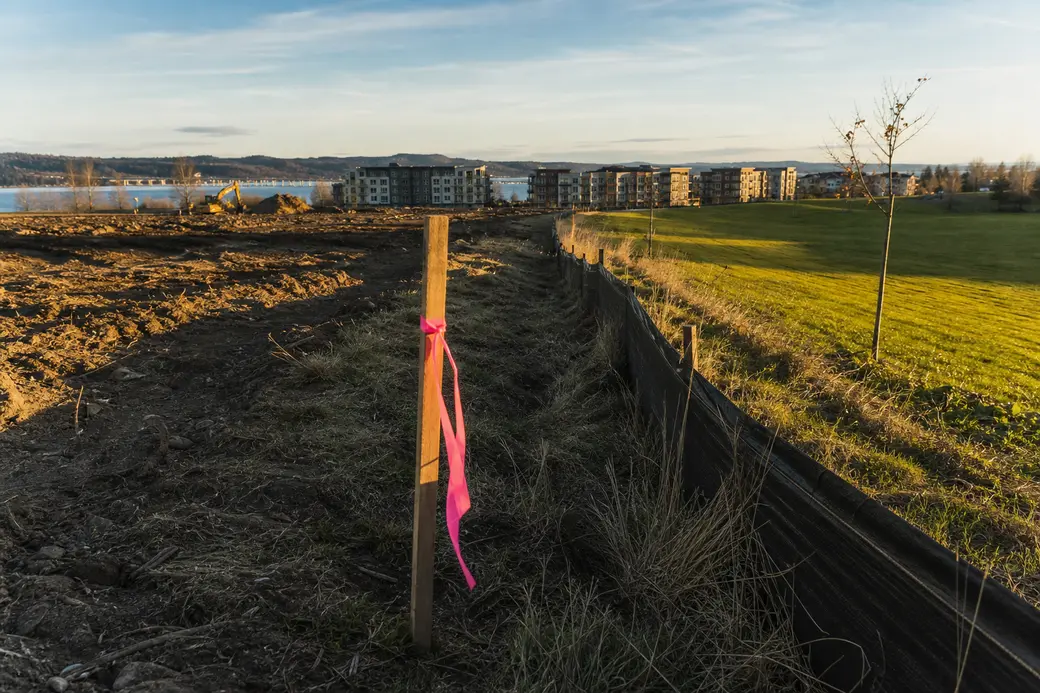
The Vancouver Waterfront's 35-acre mixed-use redevelopment is reshaping Clark County real estate by adding housing, office space, retail, dining, and jobs along the Columbia River, creating sustained demand that ripples across nearby neighborhoods and the broader Southwest Washington market.
How does the Vancouver Waterfront drive real estate growth in Clark County?
The Vancouver Waterfront drives real estate growth by combining housing construction, roughly 1 million square feet of planned office space, retail, dining, parks, and employment into a single mixed-use district along the Columbia River. A 2023 economic-impact report documented $1.6 billion invested and projected $6.1 billion in total economic output, and the project's development capacity includes up to 3,300 residential units, making it the most consequential single development reshaping Southwest Washington's real estate market today.
Key Takeaways
- The Vancouver Waterfront is a 35-acre redevelopment with capacity for up to 3,300 residential units and approximately 1 million square feet of office space, according to the City of Vancouver.
- A 2023 economic-impact report estimated $1.6 billion invested and projected $6.1 billion in total economic output, figures that reflect completed, ongoing, and projected activity through that reporting period.
- The Waterfront Gateway's first phase includes 425 residential units, with 248 of them income-restricted, meaning affordable and workforce housing is part of the plan alongside market-rate development.
- Recent local market data shows Vancouver's median sale price at $505,000 with a median of just 12 days on market, the fastest pace across Clark County's tracked areas.
- A forecast of 26,000 additional full-time-equivalent jobs projected for 2025–2030 provides a long-term economic rationale for housing demand near the waterfront corridor.
When people ask me what's driving real estate interest in Vancouver right now, the Vancouver Waterfront drives real conversations, and real decisions. I've watched this corridor go from an underused industrial stretch to one of the most talked-about addresses in Clark County. If you're considering buying, selling, or investing anywhere near downtown Vancouver, understanding what's happening along the Columbia River is not optional. It's the context for everything.
What is the Vancouver Waterfront development, and why does it matter for real estate?
The Vancouver Waterfront is a 35-acre mixed-use redevelopment project along the Columbia River, designed to reconnect Vancouver's historic downtown core with the water. According to the City of Vancouver, the project's framework combines residential development, approximately 1 million square feet of office space, restaurants, specialty retail, a hotel, parks, and transportation improvements, including connections to the Waterfront Renaissance Trail.
That mix matters for real estate in a specific way. A waterfront district that adds jobs, amenities, and foot traffic doesn't just create new housing inventory. It creates demand for housing in the surrounding neighborhoods, too. Buyers who want to live near walkable dining and green space, employers who relocate to new office buildings, and workers who follow those employers, all of them need somewhere to live in Clark County.
The investment numbers behind the growth
A 2023 economic-impact report from The Waterfront Vancouver documented $1.6 billion invested at that time and projected total economic output of $6.1 billion, measured in 2022 dollars. Those are historical estimates covering completed, ongoing, and projected activity, not a 2026 appraisal, but they give you a sense of the scale of capital committed to this corridor.
The same report estimated 25,700 construction and permanent full-time-equivalent positions created to date and projected an additional 26,000 full-time-equivalent jobs between 2025 and 2030. That second number is a forecast, not a confirmed 2026 job count. But even as a forecast, it's the kind of employment trajectory that sustains housing demand over time. Jobs bring people. People need homes.
Housing capacity: what's planned and what's built
The City of Vancouver's development framework includes capacity for up to 3,300 residential units within the waterfront district. The 2023 economic-impact report documented nearly 2,200 housing units completed, underway, or projected across apartments, condominiums, and senior-living spaces, a figure that combines multiple development statuses, not completed homes alone.
One specific piece of that pipeline is the Waterfront Gateway project, planned near Vancouver City Hall and the Vancouver Convention Center. Its first phase includes 425 residential units, with 95 designated for households at or below 60% of area median income and 153 for households at or below 80% of area median income. That's 248 income-restricted units in a single phase, a meaningful signal that the city is building for multiple income levels, not just the top of the market.
Waterfront Gateway also includes more than 10,000 square feet of local small-business retail and dining space, public plazas, and community areas. For real estate purposes, that retail activation matters: walkable amenities are one of the most consistent drivers of residential demand in urban-adjacent neighborhoods.
How does waterfront development affect home values across Clark County?
The Vancouver Waterfront drives real estate momentum beyond its own footprint. When a major mixed-use district adds employers, amenities, and new residents to a city's core, the ripple effect reaches neighborhoods well outside the development's boundaries. Here's how that plays out across the Southwest Washington market I work in every day.
Vancouver's market is moving fast
Recent local market data puts Vancouver's median sale price at $505,000, with a median of just 12 days on market. That's the fastest pace of any area tracked across Clark County right now. For context, here's how the broader market looks:
| Area | Median Sale Price | Median Days on Market |
|---|---|---|
| Vancouver | $505,000 | 12 |
| Washougal | $686,000 | 50 |
| Ridgefield | $649,991 | 50 |
| Battle Ground | $575,000 | 48 |
| La Center | $630,000 | 54 |
| Brush Prairie | $780,000 | 47 |
| Yacolt | $605,000 | 61 |
Source: Recent local market data, trailing approximately 90 days as of October 2026. Area-level medians, individual home values vary by condition, street, build year, and timing.
Vancouver's 12-day median stands out sharply against the 47–61 days seen in outlying areas. That pace reflects concentrated demand in the city's core, and the waterfront's ongoing build-out is a meaningful part of that story. Buyers who want proximity to the Columbia River corridor, walkable dining, and employment centers are competing for a limited supply of homes in that zone.
The broader Clark County effect
Not every buyer who wants to be near the waterfront ends up living on it. Some look at downtown Vancouver condos. Others move to neighborhoods a few miles out and commute in. And some, particularly families or move-up buyers, look at Washougal, Ridgefield, or Battle Ground as their base while still working or spending time near the waterfront corridor.
That geographic spread is why I always encourage buyers relocating to the region to think about the whole county, not just the headline address. If you're weighing a downtown Vancouver condo against a larger home in Brush Prairie or Camas, you're making a very different trade-off, and the waterfront's growth is part of what makes both conversations relevant. I walk my clients through exactly that kind of comparison, because the right answer depends on your commute, your lifestyle, and your timeline.
For a deeper look at what it's actually like to live in this corridor, I'd point you to my post on Vancouver Waterfront living in 2026, and if you're already thinking about buying or investing near the water, my guide to buying or investing in Vancouver Waterfront real estate goes into the specifics.
What types of real estate opportunities does the waterfront create?
The waterfront's mixed-use structure creates several distinct real estate opportunities, and they don't all look the same.
Residential: condos, apartments, and nearby single-family homes
The most direct opportunity is residential, condominiums and apartments within or adjacent to the waterfront district itself. These properties attract buyers who prioritize walkability, river views, and proximity to downtown Vancouver's dining and employment base. The project's stated capacity of up to 3,300 residential units means supply will grow over time, but the pace of that growth matters for timing decisions.
Single-family homes in neighborhoods adjacent to the waterfront corridor also benefit from the district's pull. Buyers priced out of new construction near the water often look one or two neighborhoods over, which creates demand in areas that might not have been on anyone's radar a few years ago.
Commercial and investment considerations
The roughly 1 million square feet of planned office space is significant for investors and business owners, not just homebuyers. Office tenants bring employees, and employees create demand for nearby housing, retail, and services. The 2023 economic-impact report's job-growth projections, 26,000 additional full-time-equivalent positions forecast for 2025–2030, are the economic engine behind that residential demand. Whether that forecast materializes on schedule is something worth monitoring, but the trajectory is clearly upward.
If you're thinking about the waterfront as an investment angle rather than a primary residence, the variables are different: rental demand, unit mix, proximity to amenities, and the pace of surrounding development all factor in. That's a conversation worth having with someone who tracks this market closely, not a decision to make from a listing portal alone.
For sellers in the broader Vancouver area, the waterfront's growth is also relevant context. I cover what it means for your pricing strategy in my post on what Vancouver sellers need to know right now.
If you're relocating from out of state and trying to get your bearings on where to land in Clark County, my out-of-state buyer guide for Vancouver, WA walks through the region's neighborhoods, commute realities, and what to expect from the buying process here.
Every situation is different, and the only way to know whether a specific property near the waterfront makes sense for you is to run the numbers with someone who knows this market. That's exactly what I do.
If you'd like to know what your home is worth in today's market, get a free home valuation here.
I'd also invite you to read what my clients have to say, you can find my reviews on Google.
FAQ
Is Vancouver Waterfront a good place to buy a condo or investment property?
It depends on your goals, but the fundamentals are strong: the district has capacity for up to 3,300 residential units, a forecast of 26,000 additional jobs in the surrounding area through 2030, and a walkable amenity base that supports both owner-occupant and rental demand. The right answer for your situation depends on your budget, timeline, and whether you're buying to live there or to hold as a rental, those are different calculations, and I walk buyers through both.
Are there affordable-housing options in the Vancouver Waterfront area?
Yes. The Waterfront Gateway project's first phase includes 95 units designated for households at or below 60% of area median income and 153 units for households at or below 80% of area median income, according to the City of Vancouver. These are income-restricted units, not general market-rate inventory, so eligibility requirements apply, confirming your household's qualification with the developer or the city is the right first step.
Which Vancouver neighborhoods benefit most from waterfront development?
Downtown Vancouver and the blocks immediately adjacent to the Columbia River corridor see the most direct impact, but the effect spreads outward as buyers who want proximity to the waterfront look at neighborhoods one or two miles out. Across Clark County, Vancouver's median days on market of 12 is the fastest of any tracked area, which reflects concentrated demand near the city's core. The neighborhoods that benefit most are those within a reasonable commute of the waterfront's employment base and amenities.
What new restaurants, shops, parks, and services are planned at the Vancouver Waterfront?
The Waterfront Gateway plan includes more than 10,000 square feet of local small-business retail and dining space, along with public plazas and community areas, according to the City of Vancouver. The broader waterfront district also includes a hotel, parks, and connections to the Waterfront Renaissance Trail. The mix is designed to activate the streetscape and support pedestrian use, which is one of the factors that sustains residential demand in urban-adjacent neighborhoods.
Will new waterfront construction create more housing competition or more opportunities for buyers?
Both, depending on timing and product type. New construction adds supply, which over time can ease competition for existing homes near the waterfront. In the near term, though, demand from incoming employers and workers tends to absorb new units quickly, Vancouver's current 12-day median days on market reflects how fast well-positioned properties move. Buyers who want to get ahead of the next phase of development are better served by acting with a clear strategy than by waiting for the market to soften on its own.
Equal Housing Opportunity. Shastine Bredlie, Realtor / Owner, Bredlie Realty Group, licensed through the Washington State Department of Licensing. This article is general information only and is not legal, tax, or financial advice, confirm your own numbers with your closing agent, tax advisor, or lender. IDX information is provided exclusively for consumers' personal, non-commercial use and may not be used for any purpose other than to identify prospective properties consumers may be interested in purchasing. Information deemed reliable but not guaranteed to be accurate.
Categories
- All Blogs (29)
- Buyer Resources (1)
- Camas Real Estate, Luxury Homes, Southwest Washington (1)
- Clark County Real Estate (4)
- Battle Ground (1)
- Buyer Guides (1)
- Buying a Home (1)
- Buying a Home, Clark County Market, First-Time Buyers, Relocation (1)
- Clark County Housing Market (1)
- Clark County Market (1)
- First-Time Buyers, Clark County Real Estate, Buying a Home (1)
- Home Buying in Southwest Washington (1)
- Lifestyle & Neighborhoods (1)
- Living in Battle Ground WA (1)
- Living in Brush Prairie WA (1)
- Living in Camas WA (1)
- Living in Kelso WA (1)
- Living in La Center WA (1)
- Living in Longview WA (1)
- Living in Ridgefield WA (1)
- Living in Southwest Washington (3)
- Living in Vancouver WA (1)
- Living in Washougal WA (1)
- Living in Woodland WA (1)
- Local Infrastructure (1)
- Market Insights (2)
- Market Insights, Buyer Resources, Seller Resources (1)
- Market Trends (1)
- Neighborhood Guides (1)
- New Construction (2)
- New Developments (1)
- Relocation (1)
- Relocation, Vancouver WA, Buyer Resources (1)
- Relocation, Vancouver WA, Tax & Finance (1)
- Ridgefield Real Estate (1)
- Ridgefield WA (1)
- Ridgefield WA Real Estate (1)
- Seller Resources (2)
- Seller Resources, Vancouver WA Real Estate (1)
- Selling a Home, Clark County Market, Closing Process (1)
- Selling a Home, Ridgefield WA (1)
- Southwest Washington Market (1)
- Vancouver Neighborhoods, Real Estate Investment, Buyer Resources (1)
- Vancouver WA Real Estate (6)
- Washougal Real Estate, Luxury Homes, Buyer Resources (1)
Recent Posts

GET MORE INFORMATION