
Why 'Van Angeles'? Clark County's Explosive Growth
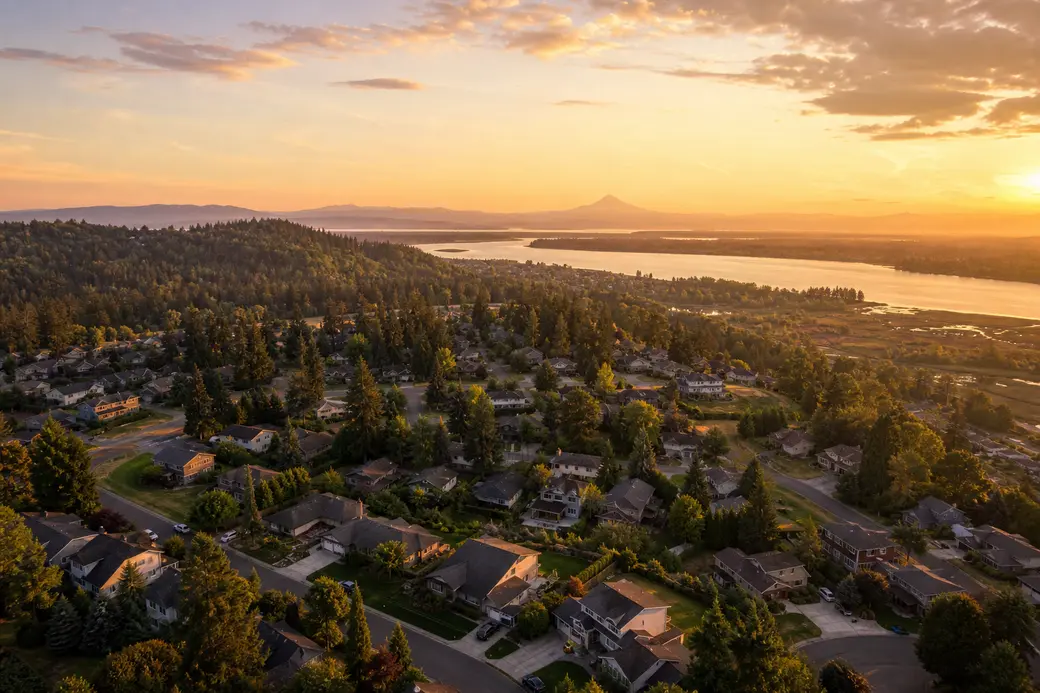
Clark County, WA earned the nickname 'Van Angeles' because it attracts thousands of Californians and Oregonians each year seeking lower taxes, more space, and relative affordability. That migration has pushed population past 532,000, driven home values higher across every submarket, and triggered a state-mandated growth plan shaping development through 2045.
Why is Clark County, WA called "Van Angeles"?
Clark County picked up the nickname "Van Angeles" because so many of its newcomers arrive directly from the Los Angeles metro and broader California, chasing Washington's lack of a state income tax, larger lots, and home prices that, even after years of appreciation, still undercut comparable properties in Southern California and the Bay Area. Add the steady stream of Portland-area residents crossing the Columbia River to escape Oregon's income tax, and you have a county that has functioned as a pressure valve for two of the West Coast's most expensive housing markets for more than a decade.
What's Actually Driving the Growth
The numbers tell a clear story. According to the World Population Review, Clark County's population reached an estimated 537,997 in 2026. The most recent official Census/FRED estimate, from 2025, placed the county at 532,119 residents, up from 516,959 in 2024. That's roughly 15,000 new residents in a single year by the official count, and the trajectory hasn't slowed.
Three forces are stacking on top of each other here.
The Tax Arbitrage Is Real
Washington has no personal income tax. Oregon's top marginal rate sits above 9%. For a dual-income household earning $150,000 combined, crossing the river can mean keeping thousands of dollars per year that would otherwise go to Salem. I've walked dozens of Portland-area buyers through this math, and it's often the single biggest financial reason they're sitting across from me instead of a Beaverton agent.
California transplants run the same calculation at a larger scale. The National Association of Realtors has tracked interstate migration into the Pacific Northwest as one of the dominant buyer-flow stories of the 2020s, and Clark County sits at the geographic sweet spot of that movement.
Space and Relative Affordability
Recent Zillow market data shows a median sale price of $515,000 for the Vancouver, WA area as of August 2026, with homes selling in a median of 14 days and 1,432 active listings currently on the market. That's a meaningful price point compared to Portland's close-in suburbs, and it's a fraction of what the same square footage costs in San Diego or the Bay Area.
But "Clark County" isn't one market. The communities spread across the county each have their own price profile, and the range is wide. Here's where the major submarkets stood as of August 2026, based on Zillow trailing sales data:
| Area | Median Sale Price | Median Days on Market |
|---|---|---|
| Camas | $806,700 | 50 |
| Washougal | $699,000 | 51 |
| Ridgefield | $677,200 | 52 |
| Battle Ground | $575,000 | 57 |
| La Center | $655,000 | 50 |
| Brush Prairie | $880,000 | 58 |
| Yacolt | $567,000 | 58 |
These are area-level medians, an individual home's value varies by condition, street, build year, and timing. But the spread matters: a buyer priced out of Camas or Brush Prairie has real options in Battle Ground or Yacolt without leaving the county. That internal flexibility is part of what makes Clark County work as a destination market.
For a deeper look at how the broader Vancouver market is performing right now, I covered the current conditions in detail in my Vancouver, WA Housing Market Reality Check.
The Portland Commute Factor
Clark County offers Portland access without Portland prices or Oregon taxes, but that equation only works if the commute is manageable. The Interstate 5 and Interstate 205 bridges over the Columbia are genuine bottlenecks, and I always tell relocating buyers to factor in bridge traffic and commute realities before choosing where to live, not just the sticker price of the home. A house in La Center that looks like a bargain can feel expensive in time if you're crossing the bridge twice a day during peak hours. That's a conversation worth having before you fall in love with a listing.
What Growth Means for the Housing Market and Future Supply
Building Permits Are Running, But Demand Is Outpacing Them
Clark County has been actively permitted. According to data from PUMS Data's building permits tracker, the county authorized 231 residential units in June 2026 alone, with 3,128 units authorized over the trailing 12 months. You can verify permit categories directly through the Clark County building permit status page, which lists single-family, duplex, multi-family, and commercial permit types.
That's a meaningful construction pipeline, but it's competing against years of accumulated demand. The CFPB's homebuying resources consistently note that supply constraints are among the primary drivers of affordability pressure in high-growth metros, and Clark County fits that description precisely.
The Comprehensive Plan Is the Long Game
Where Clark County grows next isn't just a market question, it's a planning question. The county is deep into its 2025 comprehensive plan update under Washington's Growth Management Act. A Planning Commission hearing was held on August 20, 2026, with Clark County Council public hearings scheduled for October 6 and October 13, 2026. The Final Environmental Impact Statement for the county's 10-year growth plan was released in July 2026, covering potential development impacts through 2045.
This matters for buyers and sellers because the comprehensive plan shapes urban growth boundaries, the lines that determine where new housing, roads, utilities, and commercial development can go. Communities inside an expanding urban growth area can see significant appreciation as infrastructure follows. Communities outside those boundaries stay rural by design. If you're buying with a 10- or 20-year horizon, knowing where the county is planning to grow is as important as knowing what the comps say today.
The Clark County Community Planning department is the authoritative source for following that process. I'd also point out that the Washington State Department of Commerce oversees the Growth Management Act compliance process statewide, which sets the framework Clark County is working within.
What This Means If You're Buying or Selling Now
The FRED median listing price series showed $632,400 in July 2026 for Clark County, indicating sellers were still asking at a high level even as the market had loosened from the extreme seller conditions of a few years ago. Local market reports from July 2026 showed inventory in the range of 3.9 to 4.3 months and an average total market time around 58 days, which is meaningfully different from the sub-two-week frenzies of 2021 and 2022.
That shift is actually healthy for buyers. More inventory, more negotiating room, more time to do due diligence. For sellers, it means preparation and pricing precision matter more than they did when anything listed would receive multiple offers by the weekend. Your specific situation, the condition of your home, your neighborhood, your timing, determines where you land in that range. That's exactly the kind of analysis I run for every client before we make a move.
If you're coming from out of state and trying to get your bearings on what life and real estate actually look like here, my post on living in Vancouver, WA in 2026 covers the honest local perspective, and my step-by-step guide to buying from out of state walks through the full process.
If you want to know what your home is worth in this market, or which communities make the most sense for your budget and lifestyle, get a free home valuation or reach out directly, I've been navigating this market for more than 20 years and I know where the growth is headed.
See what clients have said about working with me on Google Reviews.
Frequently Asked Questions
Why is Clark County, WA called "Van Angeles"?
The nickname reflects the large number of California residents, particularly from the Los Angeles area, who have relocated to Vancouver and Clark County over the past decade. Washington's lack of a state income tax, lower home prices relative to Southern California, and proximity to Portland's job market make the county an appealing destination. The name stuck because the migration has been significant enough to reshape local housing demand and community character.
What is driving people to move to Clark County instead of Portland?
The primary driver is Washington's lack of a personal income tax, which represents a meaningful annual savings compared to Oregon's rates. Clark County also offers more land, newer construction, and home prices that have historically run below Portland's close-in suburbs. Many buyers work in Portland but prefer to live, and pay taxes, on the Washington side of the Columbia River. The tradeoff is the bridge commute, which is a real factor worth researching before committing to a specific community.
How have Clark County home prices changed in 2026?
The FRED median listing price series showed $632,400 in July 2026 for Clark County, reflecting continued high asking prices even as the market has loosened from its peak seller-market conditions. Recent Zillow sales data for the Vancouver area shows a median sale price of $515,000 with homes selling in a median of 14 days as of August 2026. Prices vary significantly by submarket, from $567,000 in Yacolt to $880,000 in Brush Prairie, so area and property specifics matter more than a single countywide figure.
Is Clark County's housing market still competitive in summer 2026?
The market has shifted from the extreme conditions of 2021–2022 toward something more balanced. Local market reports from July 2026 indicated roughly 3.9 to 4.3 months of inventory and an average total market time around 58 days in some submarkets, compared to near-zero inventory conditions a few years ago. Vancouver-area homes are still moving in a median of 14 days, so well-priced, well-prepared homes are still attracting buyers, the days of automatic bidding wars on anything listed have passed, but demand remains real.
How does the Clark County comprehensive plan affect future housing supply?
Clark County's comprehensive plan, updated under Washington's Growth Management Act, sets the urban growth boundaries that determine where new housing and infrastructure can be built. The county's 2025 update process is active in fall 2026, with County Council public hearings scheduled for October 6 and October 13, 2026, and a Final Environmental Impact Statement released in July 2026 covering development impacts through 2045. Where those boundaries expand, or hold, will directly influence which communities see new inventory and long-term price appreciation. Buyers with a long time horizon should follow this process through the Clark County 2025 Update page.
Are building permits in Clark County keeping up with population growth?
Clark County authorized 3,128 residential units over the 12 months ending June 2026, with 231 units authorized in June alone, according to building permits data tracked by PUMS Data. That's a substantial pipeline, but population growth in the 15,000-per-year range by official estimates puts consistent pressure on new supply. The gap between permit volumes and population inflow is one reason inventory remains tight and prices have stayed elevated even as the market has cooled from its peak.
Clark County's growth story is real, it's documented, and it's reshaping every corner of this market. Whether you're trying to time a purchase, understand what your home is worth in this environment, or figure out which community fits your life, the right next step is a conversation with someone who has watched this market evolve for more than two decades. Start with a free home valuation or reach out directly, I'm here to help you make sense of it.
Equal Housing Opportunity. Shastine Bredlie, Realtor / Owner, Bredlie Realty Group, licensed in Washington State (Washington State Department of Licensing). This article is general information only and does not constitute legal, tax, or financial advice, confirm your specific numbers with your attorney, tax advisor, lender, or escrow officer. IDX information is provided exclusively for consumers' personal, non-commercial use and may not be used for any purpose other than to identify prospective properties consumers may be interested in purchasing. Information deemed reliable but not guaranteed to be accurate.
Categories
- All Blogs (29)
- Buyer Resources (1)
- Camas Real Estate, Luxury Homes, Southwest Washington (1)
- Clark County Real Estate (4)
- Battle Ground (1)
- Buyer Guides (1)
- Buying a Home (1)
- Buying a Home, Clark County Market, First-Time Buyers, Relocation (1)
- Clark County Housing Market (1)
- Clark County Market (1)
- First-Time Buyers, Clark County Real Estate, Buying a Home (1)
- Home Buying in Southwest Washington (1)
- Lifestyle & Neighborhoods (1)
- Living in Battle Ground WA (1)
- Living in Brush Prairie WA (1)
- Living in Camas WA (1)
- Living in Kelso WA (1)
- Living in La Center WA (1)
- Living in Longview WA (1)
- Living in Ridgefield WA (1)
- Living in Southwest Washington (3)
- Living in Vancouver WA (1)
- Living in Washougal WA (1)
- Living in Woodland WA (1)
- Local Infrastructure (1)
- Market Insights (2)
- Market Insights, Buyer Resources, Seller Resources (1)
- Market Trends (1)
- Neighborhood Guides (1)
- New Construction (2)
- New Developments (1)
- Relocation (1)
- Relocation, Vancouver WA, Buyer Resources (1)
- Relocation, Vancouver WA, Tax & Finance (1)
- Ridgefield Real Estate (1)
- Ridgefield WA (1)
- Ridgefield WA Real Estate (1)
- Seller Resources (2)
- Seller Resources, Vancouver WA Real Estate (1)
- Selling a Home, Clark County Market, Closing Process (1)
- Selling a Home, Ridgefield WA (1)
- Southwest Washington Market (1)
- Vancouver Neighborhoods, Real Estate Investment, Buyer Resources (1)
- Vancouver WA Real Estate (6)
- Washougal Real Estate, Luxury Homes, Buyer Resources (1)
Recent Posts

GET MORE INFORMATION